
AI Café, Research, Practices, and Commentary
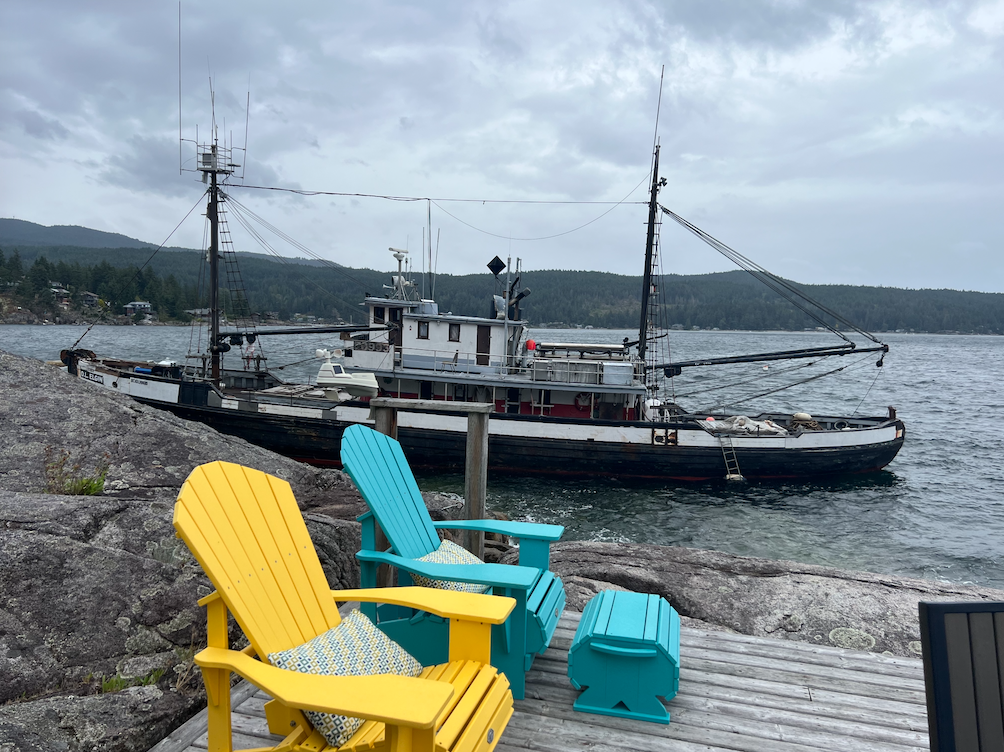
November storms bring us unexpected surprises, like the Hesquiat “on the rocks” (an 80-year-old 104 foot supply ship that found its way to our neighbour’s see deck).
- There are also continuing surprises in the AI world, many that continue to challenge the children and youth we are preparing for the dynamically changing future.
- Help out with the signature State of the Nation study! Please share your online school’s 2025-26 data at the link below.
Scroll down for the latest research, emergent practices, and commentary.
We continue to serve our network and community, but we need your help. Join us as an organizational member or individual member. Your membership and contributions will help us to keep online and digital learning in the forefront of educational improvement.
Fuel your passion! Join us as a member! Be the change in digital & online learning.
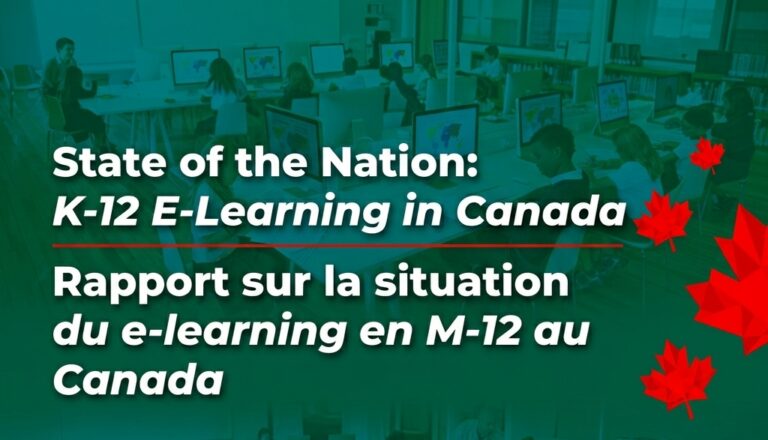
Program Leaders Data Survey
The State of the Nation report has been an identifying study for almost 20 years.
- Online program data collected complements ministry information, enabling cross-referencing, trend ID, and sharing.
- Survey responses are at the bottom of jurisdiction profiles (e.g. https://k12sotn.ca/bc/)
Click here to add your data to improve the renowned study.

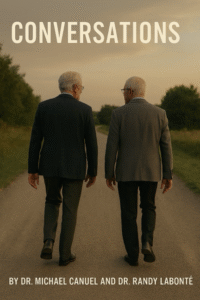
The AI Café is for families. Two grandfathers and two cheeky chatbots tackle how parents can make homework hour at the kitchen table a learning experience.
The pilot program is underway. We will share the feedback from parents with you next month.
See our new AI Café page for more information.
Check out the 6-I’s Framework one-page overview.
Check out our recent blogs:
What about the parents?
- Globally, students are taking to the streets to protest an education system that feels increasingly disconnected and under-resourced. In an AI-driven world and outdated routines, the true catalyst for meaningful reform might be the one group traditionally kept on the sidelines: parents. Read Michael’s post to discover why parents need to be the ones to argue for change before an entire generation loses faith in the schools meant to prepare them for the future.
Good Intentions: Preparing children for yesterday
- While banning smartphones and returning to printed textbooks might feel like a victory for focused learning, are we actually just preparing students for yesterday? This post explores how our understandable desire to remove digital distractions must be balanced with the need to equip children for an AI-transformed future. Read another of Michael’s posts to discover why educational progress requires evidence and balance, not just a retreat into collective nostalgia.
Check out some of Michael’s other posts on his website, including his latest, Who do you trust?
The AI Café Update
Our Pilot Program winds up next week
- Close to 30 signed up!
- Our first two conversations were held the past two weeks
- Parents attending were actively engaged
See more at The AI Café page
CANeLearn Partner Events: Check them out!
February 2-4, 2027 — Online Virtual PD Experience
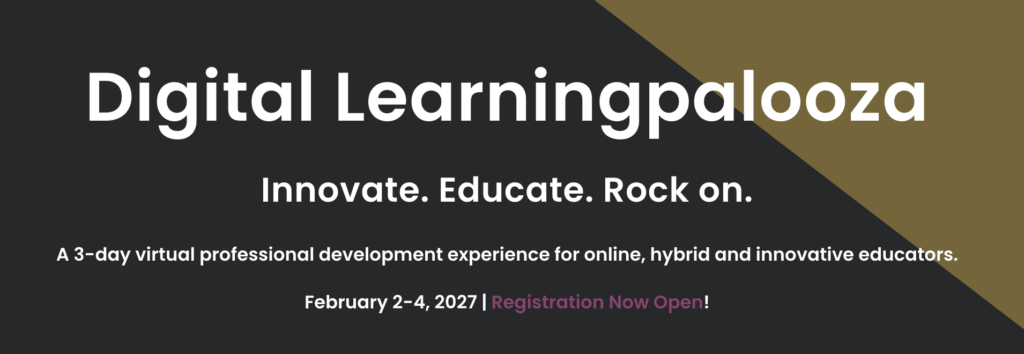
Digital Learningpalooza (DLP) is a high-energy, fully virtual professional learning experience built specifically for educators who teach and lead in online, hybrid, and innovative learning environments. It’s where you discover practical strategies, explore what’s next, and connect with people who get it.
- Regular attendee passes begin at $219.
- Organizational members receive an additional 10% discount: $197.10
- Group rates are available for 25+ attendees!
What is DLP?
This isn’t your average virtual conference. DLP is an immersive, energizing, choose-your-own-adventure PD event—designed to deliver real takeaways, real talk, and real community.
Quick “DLP Deets”
100% Virtual (join from anywhere)
Built by & for online/hybrid educators
Live sessions + discussions with 30-day recording access
Choose-your-own-adventure tracks (build your personal PD “playlist”)
Daily topic themes (Spotlight Stages)
Up to 15 PD hours / CEU
Giveaways and Games (because you deserve it)

Save the Dates!
BC Educators for Digital Learning invite you to join CANeLearn network folks at the 24th Annual Digital Learning Symposium in Vancouver April 21-23.
A dynamic event attended by professionals actively engaged in the development, organization, administration, and delivery of tech-enabled and digital learning programs for learners across BC, Canada, and beyond.
Calls for proposals coming soon!
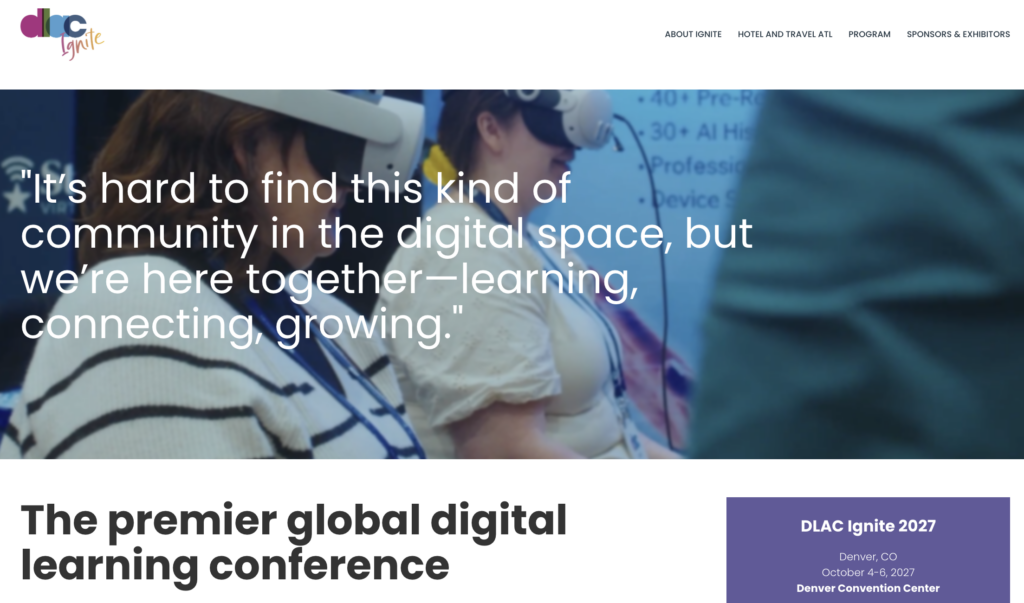
DLAC Ignite 2027
October 4-6, 2027
Denver Convention Center
In Other News...
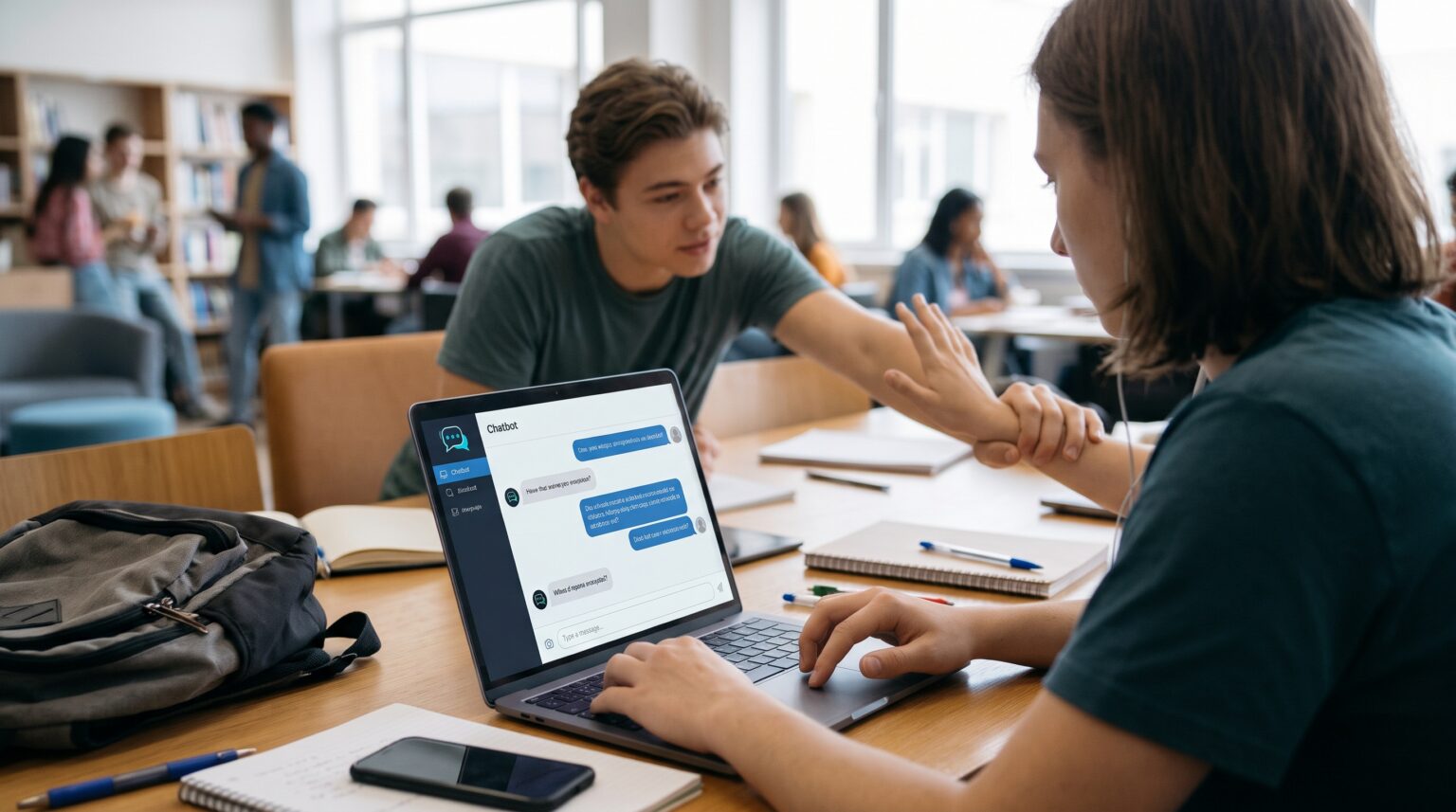
A growing number of youth, aged 15 to 22, are finding companions, but they are not human, leading to higher anxiety and depression.
A new report from Gallup found that one third of 15- to 22-year-olds across 16 countries have used AI as a social companion or friend.
- Young people with a close in-person friendship are more likely to rate that relationship as high-quality (41%) than those with an online-only friendship (26%).
- Short-form scrolling stands out among online activities for its association with lower wellbeing, higher loneliness, and more frequent symptoms of anxiety and depression.
Boston Children’s Digital Wellness Lab, with support from the Pinterest Impact Fund report is based on web surveys in 14 countries using non-probability samples and face-to-face surveys conducted May 28-Aug. 21, 2026, with 15,925 young people aged 15 to 22.
Students are relying on AI so heavily that universities are being forced to fundamentally rethink how they grade their work.
- Pervasive use of AI renders assessment of students close to impossible.
- Universities are increasingly turning to in-person written and oral exams.
Process-based assessment is required to evaluate students at multiple checkpoints rather than relying solely on their final essays is the way forward.

Universities are giving up on trying to detect AI cheating.
Michigan Virtual Learning Research Institute:
Recent Publications

Any time, any place, any pace: How time, place, and pace converge
The final report in a five-part series exploring flexibility in online learning and its relationship to student outcomes.
AI in Education: A 2026 Snapshot of Growing Use and the Shift Toward Integration
A 2026 Michigan Virtual study provides an updated look at how educators are using and thinking about artificial intelligence in K-12 education.
This study follows more than 26,000 Michigan students over two years to see how they actually use AI in their online courses—and what happens to their grades when they do. AI adoption nearly doubled, with sophisticated “tool + tutor” use growing fastest, especially among high-achieving students.
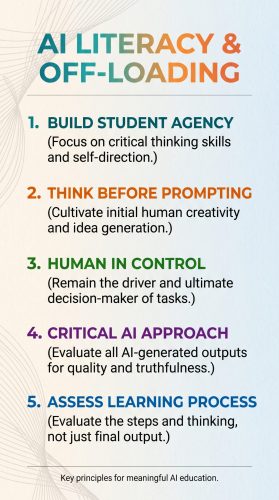
Are we teaching AI literacy, or are we just teaching students how to outsource thinking more politely?
A discussion from AIeducator.tools
AI literacy prioritizes student agency—the ability to question, critique, and explain decisions—over mere tool access, efficiency, or productivity.
Students must engage in independent cognitive struggle and generate their own ideas (“prompt the human first”).
Effective AI integration requires an intentional, iterative back-and-forth process where the student remains in charge, actively deciding what outputs to keep, reject, or adapt.
A crucial skill for students is determining the appropriate mode of AI use, maintaining the critical distance necessary to treat AI as a flawed tool rather than an infallible oracle.
Educators must shift focus from assessing final products to evaluating the entire learning process through checkpoints and reflection.
Read more here.
Got time? Check out CANeLearn Tidbits
- Call for Teacher Testers: Free Classroom Tools Designed to Cut Your Workload
- Twelve teacher-built applications are now available for testing
- All of the tools work from your own curriculum documents and lesson materials
- Try any of the tools that fit your teaching. You don’t need to test all twelve; one or two is a real help
- Share your review using this short Google Form
Download the applications and the full description here
- The AI-Resistant Pedagogy Studio: Redesigning Assignments for an AI-Augmented Classroom
- An Interactive Toolkit for Assignment Redesign is a living document—hosted at https://ynaqbxzy.manus.space/ and regularly updated with current research and vetted best practices
- 20 AI prompts to help you find your classroom “wow!” https://www.magicschool.ai/content/b2s-prompt-pack
Ongoing research from partners and CANeLearn’s own studies are published here
All images, unless otherwise noted, were created using Gemini. Nature & other photos from @rlabonte.